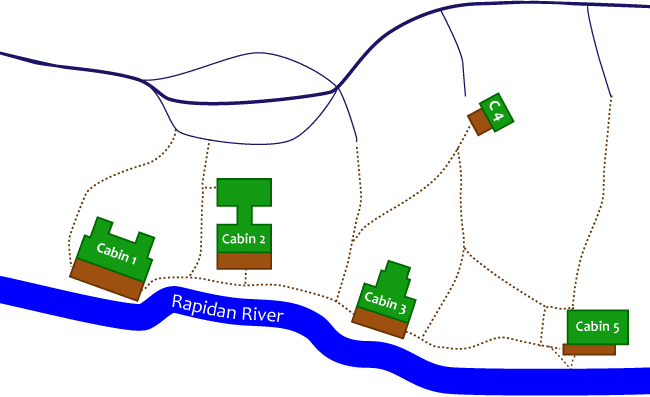
 Cabin Facilities
All cabins have electricity, with stoves, microwaves, and refrigerators. Cabins can
be rented individually, or in groups. Our cabins are historic in nature and
used for recreation; they do not have air conditioning or central heating.
Ceiling fans are present in most cabins.
Cabin 2 has no sleeping facilities, and is available to all camp
renters during their stay. If there are other renters present when you are at camp, please share the use of Cabin 2.
Electricity may fail during snow, ice, and
thunderstorms, but is generally restored somewhat promptly. For more information, contact the Registrar, JD Foster, at registrar@rapidancamps.org.
Cabin 1
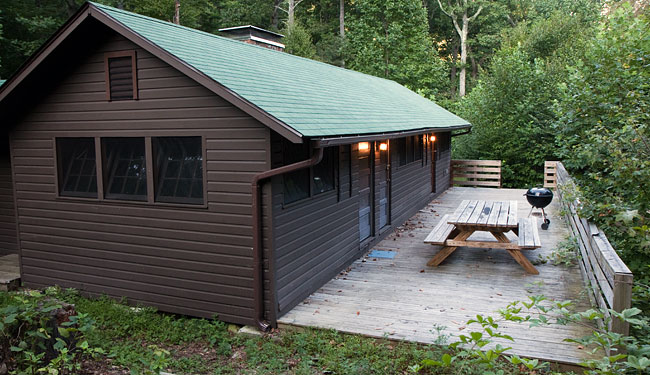
- Rebuilt in 2008 to replace original cabin
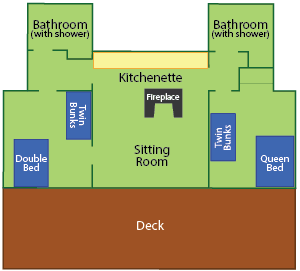
- Sleeps up to 8:
- 1 queen bed
- 1 double bed
- 4 bunk twins (2 sets)
- Original open stone chimney
- Small kitchen suitable for up to 4 people, with priority use of Cabin 2 lodge for larger groups
- 2 bathrooms with shower
- Charcoal grill off deck
Cabin 2
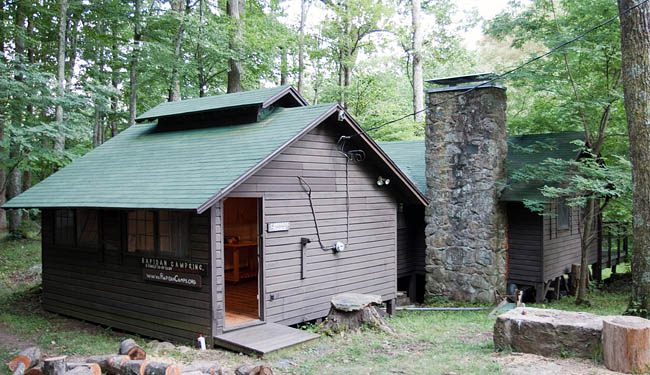
- Original 1930 cabin built by US Marines
- Large kitchen and community room for use by all campers
- Half bath
- Original open stone fireplaces
- Combination charcoal & propane grill—you must bring your own charcoal or propane
Cabin 3
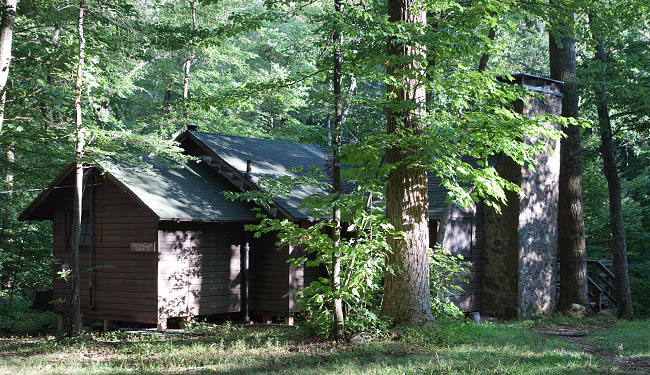
- Original 1930 cabin built by US Marines
- Sleeps up to 10:
- 4 double beds
- 2 bunk beds with double down and twin up
- Original open stone fireplace insert in main room
- Kitchen
- Bathroom with shower
- Charcoal grill off deck
Cabin 4
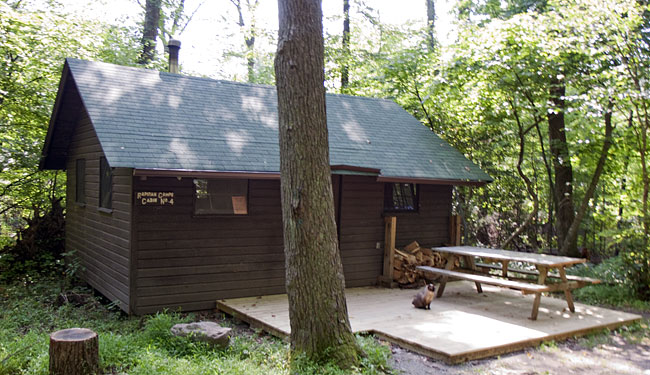
- Original 1930 cabin built by US Marines
- Sleeps up to 6:
- 1 single daybed with pop up single—converts to queen
- 1 bunk bed, with 2 twin beds and a single trundle under
- Kitchen
- Bathroom with shower
- Charcoal grill off deck
Cabin 5
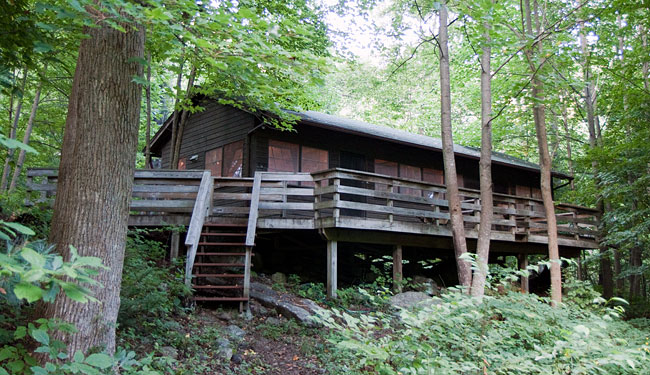
- Built in 1992
- Sleeps up to 5:
- 2 double beds
- 1 twin beds
- Original stone fireplace
- Kitchen
- Bathroom with shower
Water
Hot and cold running water are generally available inside the cabins during the warm season (mid-April
through late October). The water comes from a nearby spring. It is encouraged to boil spring and river water for 3 to 5 minutes before use.
Fires
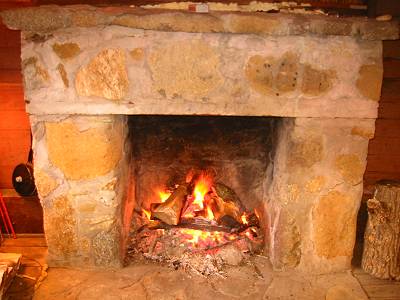
Fires may be built only in fireplaces and established outdoor firepits. You should bring your own wood, or gather
from the surrounding area wood that is both dead and fallen. The drier your wood, the more
efficiently it will burn and the warmer you will be. Leave some dry wood in the wood rack outside the cabin for the next
visitor. Ashes pose a lingering fire hazard, and must be dumped on
the main road past camp, or carried out with trash.
Parking
Motor vehicles must not be operated off road. (Do not
drive up to the cabins!) Obey posted signs.
Firearms, Hunting & Fishing
No hunting or use of firearms within 100 yards of camp property at any time. Virginia fishing regulations
apply to the Rapidan River.
Garbage
Burnable trash such as paper and food scraps can be burned with care.
You must take back all garbage you generate—there is no refuse collection at camp.
Tentsites
We do not currently permit tent camping on our property, except for
individuals renting cabins who have special permission from the Registrar.
Woodland Viruses
While rare, West Nile Virus has been reported in the mid-Atlantic states. Everyone
should take appropriate precautions when in areas where mosquitoes may be found.
Information concerning West Nile Virus, and precautions you can take against
contraction may be found on the Centers for Disease Control (CDC) website at http://www.cdc.gov/ncidod/dvbid/westnile/qa/overview.htm
Hantavirus is also occasionally found on the east coast, although it is much
more prevalent in mountain and western states. Deer mice carry the virus, and
you should be careful to avoid breathing air from stirred-up rodent droppings or
nests. More information about Hantavirus is available from the CDC at http://www.cdc.gov/ncidod/diseases/hanta/hps/noframes/transmit.htm.


